Introduction
A missing spare part rarely stays a small problem. On a refinery turnaround or a mining expansion, one mismatched valve or duplicate part number can stall a schedule for days.
In capital-intensive industries, materials aren't just line items in an inventory system. They're tied to engineering tags, procurement records, and years of operational history. Get the data wrong, and the fallout shows up as delays and cost overruns.
Yet many owner-operators and EPCs still treat materials management as a back-office procurement task. That's a costly assumption. Materials management touches asset lifecycle planning, safety compliance, procurement strategy, and digital transformation readiness.
This article defines materials management services, breaks down the core components, and explains why the function deserves a strategic seat at the table for asset-heavy organizations.
Key Takeaways
- Materials management spans planning, procurement, storage, and control, not just purchasing
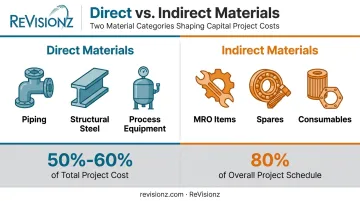
- Construction materials account for 50%-60% of total project cost and drive 80% of project schedules
- Procurement is one component of materials management, not a synonym for it
- Clean materials data reduces rework, downtime, and duplicate spending lifecycle-wide
What Is Materials Management?
Materials management is the end-to-end planning, procurement, storage, movement, and control of materials needed to support production, construction, or ongoing plant operations. It functions as a system of interconnected activities that follow a material from specification to disposal, rather than a single isolated task.
In pure manufacturing environments, the focus often narrows to production inputs, meaning raw materials and components that flow directly into a finished product. But for EPCs and owner-operators in energy, chemicals, and mining, the scope widens considerably. Materials here include master data, tagging conventions, and technical specifications tied directly to engineering documents and asset registers.
Direct vs. Indirect Materials
Not all materials serve the same purpose, and the distinction matters:
- Direct materials — components used directly in a product or asset, such as piping, structural steel, or process equipment
- Indirect materials — MRO items, spares, and consumables that keep operations running but don't become part of the finished asset
MRO and spares data present a distinct challenge. Unlike direct project materials, which get tracked closely during construction, spares often sit in poorly governed inventory systems for years, accumulating duplicate SKUs and inconsistent specifications.
Why Materials Data Quality Matters
Materials management bridges procurement, engineering, and operations. When that bridge is weak, poor materials data (duplicate part numbers, inconsistent specs, missing certifications) creates downstream problems during project handover and maintenance.
The financial exposure is significant. According to the Construction Industry Institute, construction materials constitute 50%-60% of total project cost, and materials management activities account for 80% of the overall project schedule. That gap determines whether a project finishes on time or bleeds cash on every change order.
The Five Core Areas of Materials Management Services
Industry practitioners often describe materials management through what's known as the "five rights" framework. The Chartered Institute of Procurement & Supply frames this as obtaining the right materials, at the right quality, quantity, price, time, and place. This framework maps directly to the five core areas below.
Right Materials and Right Quality
Specifications and standards must be met precisely, or the consequences show up fast:
- Rework when parts don't fit or meet code
- Scrap when materials fail QA inspection
- Safety incidents when non-certified components enter service
This matters most in regulated industries, where a substituted gasket or an uncertified fitting can trigger a compliance failure, not just a maintenance headache.
Right Quantity and Right Time
Ordering too little causes stockouts that halt work. Ordering too much ties up cash in warehouse shelves. Getting this balance right depends on:
- Accurate demand forecasting
- Disciplined material requirements planning (MRP)
- Realistic lead-time assumptions for specialized components
Right Source, Right Price, and Right Place
Vetting suppliers isn't just a cost exercise. For specialized industrial components with long lead times, sourcing decisions made months in advance determine whether a project stays on schedule. Strategic sourcing means qualifying vendors on reliability and quality, not price alone.
Where those materials end up matters just as much as who supplies them. Storage, warehouse logistics, and delivery coordination round out the framework, particularly across multi-site operations or sprawling project locations. A part sitting in the wrong warehouse is functionally the same as a part that doesn't exist.
These five areas don't operate in isolation. They function as an integrated system. Get the quantity right but the timing wrong, and you still have a stockout. Source the right supplier but ship to the wrong site, and the project stalls anyway.
Materials Management vs. Procurement: Are They the Same?
No. Procurement is a subset of materials management, not an interchangeable term for it. Procurement focuses specifically on sourcing and purchasing. Materials management also covers inventory control, storage, quality assurance, and material planning across the full lifecycle.
Procurement answers "how do we buy it?" Materials management answers "how do we plan, receive, store, track, and account for it once it's ours?"
How Does This Differ From Supply Chain Management?
Supply chain management (SCM) is broader still. According to the Association for Supply Chain Management, SCM covers the design, planning, execution, control, and monitoring of activities across an entire network of suppliers, distributors, and customers.
A quick comparison:
| Function | Primary Focus |
|---|---|
| Procurement | Sourcing and purchasing goods/services |
| Materials management | Planning, storage, quality, and control within the organization |
| Supply chain management | The full external network, from raw supplier to end customer |
Some organizations combine these functions under one team, particularly smaller EPCs. Larger owner-operators typically split them across procurement, engineering, and operations departments, which is exactly where materials data tends to fragment if no one owns governance end to end.
What Is a Materials Management System?
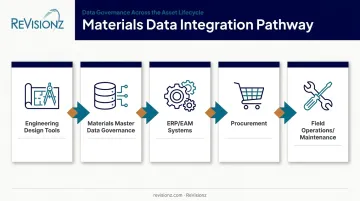
A materials management system combines technology (ERP, EAM, materials master databases) with the processes used to plan, track, and control materials across their lifecycle. It's the operational backbone that makes the five rights achievable at scale.
Common system capabilities include:
- Automated reorder points that trigger purchasing before stockouts occur
- Supplier and vendor data integration for faster sourcing decisions
- Real-time inventory visibility across warehouses and job sites
- Material master data governance to prevent duplicate records
Beyond these baseline capabilities, one requirement matters most for engineering-intensive industries: integration. Materials management systems must connect with engineering design tools and asset information platforms so material data stays consistent from design through operations.
Without that connection, part numbers can drift as they move through the lifecycle. The number an engineer specifies in a 3D model may not match the number on a procurement order. What maintenance ultimately receives in the field can differ yet again.
Why Materials Management Services Matter for Capital-Intensive Industries
Effective materials management reduces an asset's total cost of ownership. It does this by preventing duplicate purchasing, correcting inaccurate spares data, and tightening inefficient procurement cycles that quietly drain budgets over years, not just during a single project phase.
Safety, Compliance, and Operational Readiness
Clean, structured materials data improves safety and regulatory compliance. When materials are properly tagged and traceable, maintenance teams can confirm they're installing the right certified spare, not a close substitute that happens to fit.
That same data discipline bridges the gap between project delivery and operations. Poor handover of materials data is a common cause of startup delays and maintenance backlogs. A facility can be mechanically complete yet still miss its go-live date if no one can confirm which spares exist in the warehouse. This gap often surfaces during commissioning, when procurement records rarely match what's actually on site.
The Business Case, in Numbers
McKinsey's research on digital MRO procurement backs this up:
- A materials company achieved 40% lower MRO inventory through analytics-based simulation
- A global metals producer cut overall MRO spend by 20% through SKU matching alone
Accurate materials and MRO data also underpins predictive maintenance and reliability programs. Maintenance teams can't plan confidently around spares they aren't sure exist, or worse, that exist under three different part numbers in three different systems.
How ReVisionz Approaches Materials Management Services
ReVisionz expanded its Materials Management Practice in October 2024, responding to growing demand from EPCs and owner-operators wrestling with exactly the data problems described above. The practice is led by Stuart Baker, Partner and Materials Management Practice Area Lead, alongside Clayton Cooper, Associate Partner and Digital Catalog Management Lead.
Rather than focusing on transactional procurement, ReVisionz concentrates on:
- Governing materials master data quality across the enterprise
- Rationalizing MRO and spares to eliminate duplicate and unreliable records
- Integrating materials data with engineering and Asset Information Management (AIM) programs
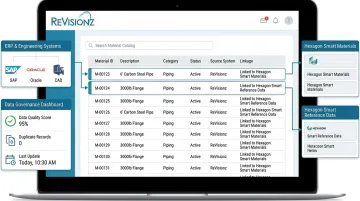
This work often uses platforms like Hexagon's Smart Materials and Smart Reference Data to build governed catalogs that connect back to ERP, manufacturing, and construction systems. ReVisionz's Strengthening Materials Management to Improve Data Trust success story illustrates how this plays out in the energy infrastructure sector.
Across engagements like this, ReVisionz's technology-agnostic data migration and enrichment methodology turns scattered, unstructured materials data into lifecycle-ready information. This foundation is what digital twin and predictive maintenance initiatives depend on to function reliably.
Frequently Asked Questions
What do materials management services do?
They plan, procure, store, and control materials so the right items are available at the right time, quantity, and cost across production or operations. This covers the full lifecycle, from specification through disposal.
What is a materials management system?
It is the combination of technology (ERP, EAM, materials master tools) and processes used to track and govern materials data throughout their lifecycle, from design specification through field use.
Are materials management services the same as procurement?
No. Procurement is one component of materials management, focused on sourcing and purchasing. Materials management also includes inventory control, storage, quality control, and material planning.
What are the five major areas of materials management services?
The five rights: right materials, right quantity, right time, right price, and right source. These function together as an integrated system rather than as separate checkboxes.
How does materials management support asset lifecycle management?
Accurate materials data carries through from engineering and construction into operations and maintenance. This continuity supports long-term asset performance and prevents costly handover gaps.
Which industries rely most heavily on materials management services?
Energy, chemicals, mining, and manufacturing depend most heavily on strong materials management. High complexity, long-lead-time components, and strict regulatory requirements make weak materials data particularly costly in these sectors.