Introduction
Oil & gas facilities, chemical plants, mines, and manufacturing sites generate mountains of engineering and operational data every day. That data lives in 3D design tools, legacy engineering databases, maintenance systems, and stacks of EPC handover packages that rarely talk to each other.
Most organizations know they have a data problem. Fewer have a structured plan to fix it.
Teams debate naming conventions, buy new software platforms, and still end up with the same headaches:
- Rework during commissioning
- Safety gaps hiding in incomplete asset registers
- Digital transformation projects that stall before delivering value
Industrial analytics teams spend 70%-80% of their time preparing and cleaning data rather than analyzing it, according to LNS Research.
This guide explains what a data governance roadmap actually is, why owner-operators and EPCs need one, the pillars it should cover, how to build one in phases, and the mistakes that derail most attempts.
Key Takeaways
- A roadmap sequences priorities and actions, unlike a static policy framework
- Cross-discipline engineering data fragments easily without a clear handover plan
- Six pillars, from data quality to technology enablement, anchor the roadmap
- Building a roadmap takes six phases, from initial assessment to continuous improvement
- Over-engineering and IT-only ownership are the top pitfalls that stall programs
What Is a Data Governance Roadmap?
A data governance roadmap is a strategic, phased plan. It sequences specific actions, priorities, and milestones that move an organization from fragmented, ad-hoc data practices toward controlled, lifecycle-ready data maturity.
That's different from a policy binder that sits on a shelf. A roadmap is dynamic, prioritizing initiatives based on business and operational impact rather than attempting to fix every data problem simultaneously. You pick the highest-value fights first.
For asset-intensive organizations, the roadmap has to get specific fast. It needs to address:
- Inconsistent tagging across piping, electrical, and instrumentation disciplines
- Incomplete data at project handover, where engineering contractors deliver packages that don't match operational requirements
- Disconnected systems between design environments and maintenance platforms
Generic data governance advice rarely accounts for these realities. A roadmap built for a retail company won't help a refinery reconcile tag formats between P&IDs and its maintenance management system.
Data Governance Roadmap vs. Data Governance Framework
People use these terms interchangeably, and that's a mistake. A framework defines the rules, roles, and structures, answering "what." A roadmap answers "when and how." It's the execution plan that puts the framework into motion.
| Dimension | Data Governance Roadmap | Data Governance Framework |
|---|---|---|
| Purpose | Sequence and execute governance initiatives | Define governance rules, roles, and structures |
| Focus | Timeline, priorities, and milestones | Policies, accountability, and decision rights |
| Time Orientation | Dynamic; evolves as the organization matures | Relatively fixed; updated periodically |
| Output | Phased action plan with owners and dates | Governing document defining "what" and "who" |
Here's the part most guides miss: a roadmap should evolve as a capital project transitions from EPC delivery into long-term operations. The framework rarely needs a rewrite mid-project, but the roadmap does, constantly.

Why Asset-Intensive Industries Need a Clear Governance Roadmap
Engineering data doesn't live in one place. It's scattered across 3D design tools, SmartPlant or Smart 3D environments, maintenance systems, and dozens of spreadsheets nobody officially owns. Without a roadmap, that complexity turns into fragmented, untrustworthy data right at the moment it matters most: handover.
The cost of getting this wrong is well documented. A McKinsey study found that engineering programs combining a single source of truth with better cross-functional workflows deliver 30%-50% time and cost savings on capital projects.
Bad master data doesn't stop at the project gate, either. Inaccurate plant dashboards built on that same untrustworthy data directly cause efficiency losses once assets reach operations.
A roadmap is the bridge between project delivery and operational readiness. Without one:
- Handover data becomes a liability instead of an asset
- Safety and regulatory compliance gaps go unnoticed until an audit surfaces them
- Predictive maintenance programs stall because the underlying asset data can't be trusted
Standards bodies have tried to close this gap at the industry level. CFIHOS, now governed through IOGP's Joint Industry Project 36, structures handover data and documents so operators, contractors, and suppliers work from the same reference terms.
It's a useful backbone, but adopting a standard isn't the same as having a roadmap. You still need a sequenced plan to apply it across your specific asset portfolio.
Key Pillars of an Effective Data Governance Roadmap
Every credible roadmap rests on the same six pillars. Skip one, and the whole structure gets shaky.
1. Data quality standards. Define how you'll measure accuracy, completeness, and consistency across engineering and asset data, then set a baseline you can improve against over time. Without this, "good enough" becomes whatever the last person to touch the data decided.
2. Metadata, tagging, and lineage. Tags are unique identifiers for equipment and instruments, and they show up everywhere, from P&IDs to vendor documentation to maintenance records. Your roadmap needs consistent tagging conventions and traceability from design through operations. This is the backbone of any serious asset information management (AIM) program.
3. Roles and ownership. Identify Data Owners and Data Stewards across engineering, IT, and operations. Then form a governance council with both business and technical stakeholders, small enough to make timely decisions.
4. Policies and standards. Codify naming conventions, tagging standards, and access and security policies built for process and manufacturing environments specifically, not generic IT security templates.
5. Technology enablement. Data catalogs, digital twin platforms, and AI-powered enrichment tools should automate enforcement. Manual data checks don't scale across millions of tags and documents.
6. Metrics for maturity. Track KPIs such as:
- Percentage of assets with complete, validated tags
- Data completeness scores by discipline
- Handover readiness benchmarks tied to specific milestones
Phases to Build Your Data Governance Roadmap
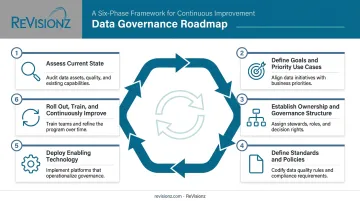
Building the roadmap itself follows a logical sequence. Here's how the six phases break down:
- Assess Current State: Run a maturity assessment across engineering systems, legacy databases, and asset registers. The goal is finding gaps in ownership, data quality, and consistency before you commit to a direction.
- Define Goals and Priority Use Cases: Anchor the roadmap to one or two high-impact outcomes, like improving handover readiness or enabling predictive maintenance. Trying to govern everything at once is how roadmaps die in year one.
- Establish Ownership and Governance Structure: Assign Data Owners and Stewards, then form a lean governance council spanning engineering, IT, and operations that can make decisions without a six-week approval chain.
- Define Standards, Policies, and Data Definitions: Create master data standards, tagging conventions, and access and retention policies specific to your asset and engineering data types. Industry frameworks like CFIHOS offer a useful starting point in oil & gas and petrochemical environments.
- Deploy Enabling Technology: Implement migration, enrichment, and monitoring tools that automate quality checks. Manual data cleansing has a ceiling, and most organizations hit it fast.
- Roll Out, Train, and Continuously Improve: Train teams on the new workflows and integrate governance checks into project processes rather than bolting them on afterward. Review KPIs quarterly and refine the roadmap for the next cycle.
Common Pitfalls to Avoid When Building Your Roadmap
Even well-intentioned programs stumble in predictable ways. Three mistakes account for most of the failures we see:
- Over-engineering upfront. Chasing a "perfect" governance state before launch stalls momentum fast. Start with a minimum viable governance model focused on your highest-impact assets, then expand.
- Treating it as an IT-only initiative. Governance programs that exclude engineering and operations stakeholders get low adoption and spawn shadow processes. Field teams find workarounds when they weren't part of the decision.
- Underestimating change management. Resistance from engineering and field teams accustomed to legacy workflows is real, and it requires dedicated training and communication, not just new software.
These pitfalls share a root cause: unclear decision rights. Fix that before you pick a platform, and adoption follows naturally.
How ReVisionz Helps You Build and Execute Your Roadmap
ReVisionz has spent 25 years guiding owner-operators and EPCs through this exact process, from current-state assessments to full-scale roadmap implementation across complex, multi-site operations.
The company's practice leads have worked hands-on with Hexagon's SmartPlant suite, AVEVA E3D, and asset registers like Maximo. That firsthand experience shapes roadmaps that account for how engineering data actually moves through a plant, not just how it's supposed to move on paper.
Two capabilities tend to accelerate the roadmap once it's defined:
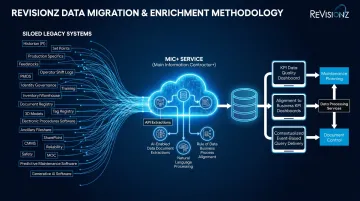
- Data migration and enrichment methodology, built to move engineering content out of siloed legacy systems into a governed, lifecycle-ready structure without losing business context along the way
- Main Information Contractor+ (MIC+), ReVisionz's AI-powered service, designed to convert unstructured engineering data into information that's usable across the asset lifecycle
If your organization is staring at a fragmented asset portfolio and doesn't know where to start, connect with ReVisionz for a tailored data governance roadmap assessment.
Frequently Asked Questions
What are the key pillars of data governance?
The core pillars are data quality standards, ownership and roles, policies and procedures, metadata and lineage, and technology enablement. Together, they cover how data is defined, measured, controlled, and traced across its lifecycle.
Will AI replace data governance?
No. AI automates enforcement and monitoring tasks like tagging and quality checks, but it still needs human-defined policies, ownership, and business context to function responsibly. Governance decisions remain a people-led activity.
How long does it take to build a data governance roadmap?
Initial roadmaps typically take 4-8 weeks to draft. Most organizations target meaningful, visible wins within the first 3-6 months of execution.
Who should be involved in creating a data governance roadmap?
Cross-functional stakeholders are essential: data and asset leadership, engineering, IT, operations, and compliance teams. Leaving any one of these groups out creates adoption problems later.
What's the difference between a data governance roadmap and a data governance strategy?
A strategy defines the overall goals and the governing framework. The roadmap sequences the specific milestones, owners, and timeline needed to achieve those goals.
How do you measure the success of a data governance roadmap?
Track KPIs like data quality scores, the percentage of assets with defined ownership, and handover readiness metrics over time. Progress should be reviewed quarterly, not just at project close.