
This is the exact problem DataOps was built to solve. It borrows the speed and discipline of agile software development and applies it to data itself. The market has noticed: the global DataOps platform market is projected to grow from $3.9 billion in 2023 to $10.9 billion by 2028, a 23.0% compound annual growth rate, according to MarketsandMarkets.
This article breaks down what DataOps actually means, how its framework functions, and why it matters for capital-intensive industries like energy, chemicals, and manufacturing.
Key Takeaways
- DataOps applies agile and DevOps principles to speed data delivery and build trust
- Five components drive it: orchestration, governance, CI/CD, observability, and automation
- Poor data quality costs the average organization $12.9 million per year
- Asset-intensive industries benefit most, given fragmented engineering and operational data
What Is DataOps?
DataOps is a set of practices that blend agile methodology, DevOps principles, and data management technology. The goal: make data workflows faster, more reliable, and more collaborative.
Gartner defines DataOps as a collaborative data-management practice centered on communication, continuous integration, automation, and observability between data teams and the people who use their output. It didn't emerge in a vacuum. DataOps grew directly out of DevOps, adapted for a harder problem: data changes constantly, arrives from dozens of sources, and breaks in ways software code never does.
The Agile Data Method in Practice
DataOps borrows agile's core habits and applies them to pipelines instead of application code:
- Iterative sprints: building and refining pipelines in small, testable increments rather than one massive rollout
- Continuous feedback: looping in business stakeholders early so data products match real operational needs
- Cross-functional teams: pairing engineers, analysts, and domain experts instead of working in isolation
Core Objectives
DataOps practices typically target four outcomes:
- Faster data delivery: shrinking the time between data creation and usable insight
- Higher data quality: catching errors before they reach decision-makers
- Better collaboration: breaking down the wall between IT and business teams
- Greater agility: adapting pipelines quickly as requirements shift
Why Traditional Data Management Falls Short
Traditional approaches weren't built for today's data volume or velocity. Siloed teams, manual reviews, and disconnected tools create friction at every handoff.
According to McKinsey's research on master data management, the damage is widespread. Among more than 80 large organizations surveyed, 80% had divisions operating in silos with their own systems and standards, and 66% still relied on manual review to manage master-data quality.
These numbers reflect a systemic, industry-wide problem.
For organizations pulling data from multiple engineering and operational systems, this manual, siloed approach doesn't just slow things down. It erodes trust in the numbers themselves.
The DataOps Framework: Key Components
The DataOffs Framework: Key Components
Most DataOps frameworks distill into five interconnected components. Together, they form a control loop: orchestration moves the data, governance sets the rules, CI/CD manages change, observability watches for problems, and automation keeps it all running without constant manual intervention.

Data Orchestration
Orchestration automates the scheduling, sequencing, and error handling of data workflows across multiple systems. Instead of someone manually kicking off a nightly extract or troubleshooting a failed load at 2 a.m., orchestration tools coordinate the entire flow (extraction, transformation, loading, and delivery) and flag failures automatically. Platforms such as Apache Airflow and Dagster handle this coordination across dozens of pipelines, replacing patchwork scripts and cron jobs.
Data Governance
Governance establishes the rules that keep data trustworthy. Its core pillars include:
- Quality standards that define acceptable accuracy and completeness
- Security protocols that control who can access sensitive data
- Lineage tracking that shows where data originated and how it changed
- Compliance requirements tied to industry standards such as CFIHOS
Without governance, faster pipelines just mean faster delivery of bad data. These frameworks balance the need for quick access with the controls that keep information audit-ready.
CI/CD for Data Pipelines
Continuous integration and continuous delivery bring automated testing to pipeline changes. Before a modification reaches production, it passes through validation checks, the same discipline software teams use before shipping code, just applied to data transformation logic instead. A typical check might verify that a schema change doesn't break a downstream report.
Data Observability
Observability provides real-time monitoring, alerting, and dashboards that catch pipeline or quality issues before they reach a decision-maker's desk. Common mechanisms include lineage tracing and root-cause analysis, which shorten the time between "something's wrong" and "here's why." Platforms like Monte Carlo and Databand apply this monitoring to data quality, flagging anomalies such as a sudden drop in row counts.
Automation
Automation removes manual effort from repetitive tasks like ETL processing, regression testing, and smoke tests. Rather than replacing data teams, automation frees them from repetitive maintenance to focus on higher-value analysis.
DataOps vs. DevOps: Key Differences
DataOps borrows its name and iterative philosophy from DevOps, but calling it "DevOps for data" oversimplifies things. DevOps ships software features. DataOps delivers trusted, timely data — and data has its own unique challenges, since the underlying information keeps changing even after a pipeline is deployed.
| Dimension | DevOps | DataOps |
|---|---|---|
| Managed scope | Software code and application releases | Data, transformation logic, and analytics pipelines |
| Primary outcome | Faster, more reliable software releases | Faster delivery of trusted, accurate data |
| Production concern | How the application behaves after release | Both pipeline behavior and constantly changing source data |
| Feedback loop | Bug reports, performance monitoring | Data quality tests, lineage alerts, stakeholder trust |
Despite the differences, both disciplines share common ground. Shared traits include:
- Agile iteration cycles that shorten feedback loops
- Cross-functional collaboration between technical and business teams
- Heavy automation to reduce manual, error-prone work
DevOps established many of these practices first. DataOps adapted them to handle data that keeps changing shape long after a pipeline goes live.
Benefits of DataOps for Modern Operations
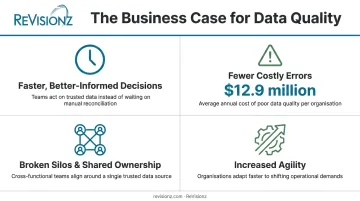
DataOps delivers measurable, day-to-day advantages for operations teams managing complex asset portfolios. Four benefits stand out:
- Faster, better-informed decisions: DataOps shrinks the gap between when data is generated and when it's trustworthy enough to act on, cutting delays in production scheduling and maintenance planning.
- Fewer costly errors: Built-in testing and validation catch problems before they compound. Gartner puts the average cost of poor data quality at $12.9 million per organization, per year — a total that includes wasted labor, missed opportunities, and decisions made on faulty numbers.
- Broken silos, shared ownership: Data engineers, analysts, IT, and business teams collaborate instead of working in sequence, giving everyone visibility into the same pipeline and eliminating "that's not my job" moments when something breaks.
- Increased agility: When a new regulation or market shift demands a pipeline change, agile-driven DataOps teams adapt in days, not quarters, avoiding costly delays in compliance reporting.
These benefits play out concretely in client engagements.
ReVisionz in Action: A Refinery Case Study
One oil refinery client came to ReVisionz with asset data so unreliable it was actively blocking reporting inside their IBM Maximo system. ReVisionz executed data quality improvements offline, delivering a trusted master asset register without burdening internal resources or introducing rework.
The result: renewed confidence in the data, a shift toward long-term asset hierarchy improvements, and an invitation to extend the same approach into a new greenfield project.
How to Implement DataOps: Best Practices
Rolling out DataOps does not require a company-wide overhaul on day one. Start narrow, prove value, then scale.
- Assess current data maturity. Identify your highest-priority use cases and define clear KPIs before touching a single pipeline.
- Build a cross-functional team. Pair data engineers, stewards, and analysts with the business stakeholders who will actually use the output — supported by a governance framework that everyone understands.
- Automate incrementally. Target your highest-impact pipeline first. Monitor results through observability data, then iterate based on what you learn.
TDWI's research on data management confirms this sequencing: start small, automate incrementally, and build collaboration in from the beginning rather than retrofitting it later.
DataOps for Asset-Intensive Industries: Why It Matters
Owner-operators and EPCs in oil & gas, chemicals, mining, and manufacturing face a distinct version of the data problem. Engineering drawings, P&IDs, sensor and IoT feeds, and decades of maintenance records often exist in disconnected, unstructured formats — some scattered across legacy systems that predate the current workforce.
Manufacturing alone illustrates the stakes. The World Economic Forum estimates that better data sharing in manufacturing could unlock more than $100 billion in value, with asset optimization cited as the most relevant application by nearly half of surveyed managers. Interoperability, infrastructure, and governance gaps hold that value back: the exact problems DataOps principles target.
Applying orchestration, governance, and observability to asset information management delivers concrete results:
- Improved safety through more reliable equipment and inspection data
- Stronger regulatory compliance with audit-ready lineage and documentation
- Better asset performance across the full lifecycle, from design through decommissioning
Turning those principles into practice starts with a structured data foundation. As a digital asset transformation consultancy, ReVisionz uses proven data migration and enrichment methodologies to help owner-operators turn disconnected engineering and operational records into structured, lifecycle-ready information.
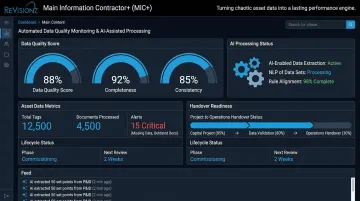
Its AI-powered Main Information Contractor+ (MIC+) service extends this further, applying automated data quality monitoring and AI-assisted processing to support smoother handovers between capital projects and ongoing operations. For organizations managing billions in physical assets, that structured foundation is what makes real-time insight and predictive maintenance possible in the first place.
Frequently Asked Questions
What is the agile data method?
Agile data methods apply iterative, sprint-based development and continuous stakeholder feedback to building and refining data pipelines. DataOps builds on this foundation, prioritizing small releases over massive one-time rollouts.
What are the 5 pillars of data management?
Commonly cited pillars include data quality, governance, security, architecture and integration, and lifecycle management. DAMA-DMBOK, the industry's reference framework, defines 11 distinct knowledge areas rather than a strict five-pillar model.
What are the 7 building blocks of MDM?
Gartner's widely referenced framework outlines vision, strategy, metrics, governance, organization, life cycle, and infrastructure as the seven building blocks of Master Data Management.
How does DataOps differ from DevOps?
DevOps focuses on delivering software features faster and more reliably. DataOps applies similar agile and automation principles, but its target is trusted, timely data delivered to business stakeholders rather than application code.
What are the key components of a DataOps framework?
The five core components are orchestration, governance, CI/CD, observability, and automation. Together they form a loop that moves data, sets rules, manages change, monitors health, and reduces manual effort.
Does DataOps apply to asset-intensive industries like oil & gas and manufacturing?
Yes. Organizations increasingly apply DataOps principles to engineering and operational data in capital-intensive industries, improving asset performance, safety, and regulatory compliance across the full asset lifecycle.